Step2It smart cane
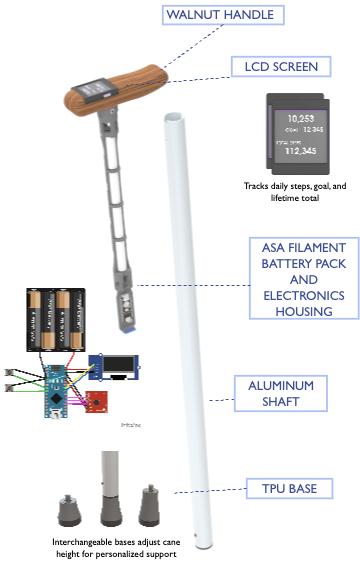
A walking cane with a hidden step counter and display, built for elderly who need a reason to move without changing their routine.
My role
Designed and manufactured the walnut handle. Owned the full business plan through financial modeling, market sizing, and pricing.
- Price
- $149.99
- Gross margin
- 61%
- Break-even
- Year 1
- Build time
- 5 hr
- Target SOM
- ~$106M
Key takeaways
- Started from user research. 68% of cane users we surveyed are active fewer than 2 days a week.
- One hard requirement, no behavior change. All electronics hide inside the handle without changing its profile.
- Built to manufacture, with an aluminum shaft, TPU foot, ASA printed housing, and Arduino step counter.
- Priced at about half the leading competitor with a 61% gross margin.
Engineering deep dive

Design and business notes
Research
Interviews with older adults, caregivers, and physical therapists. 75% of caregivers believed their loved ones would benefit from more activity, and 55% of that activity already came from walking. Patent and competitor review covered 10+ products.
Requirements
Accurate step count, lightweight, easy to use, durable, good looking, and easy battery replacement. Interviews made the walnut handle a must as our users wanted something that looked premium, not medical.
Market
$28B TAM in global elderly and assistive devices, $532M SAM in U.S. canes, and ~$106M SOM from the 20% of cane users willing to adopt a wearable health device.
Manufacturing
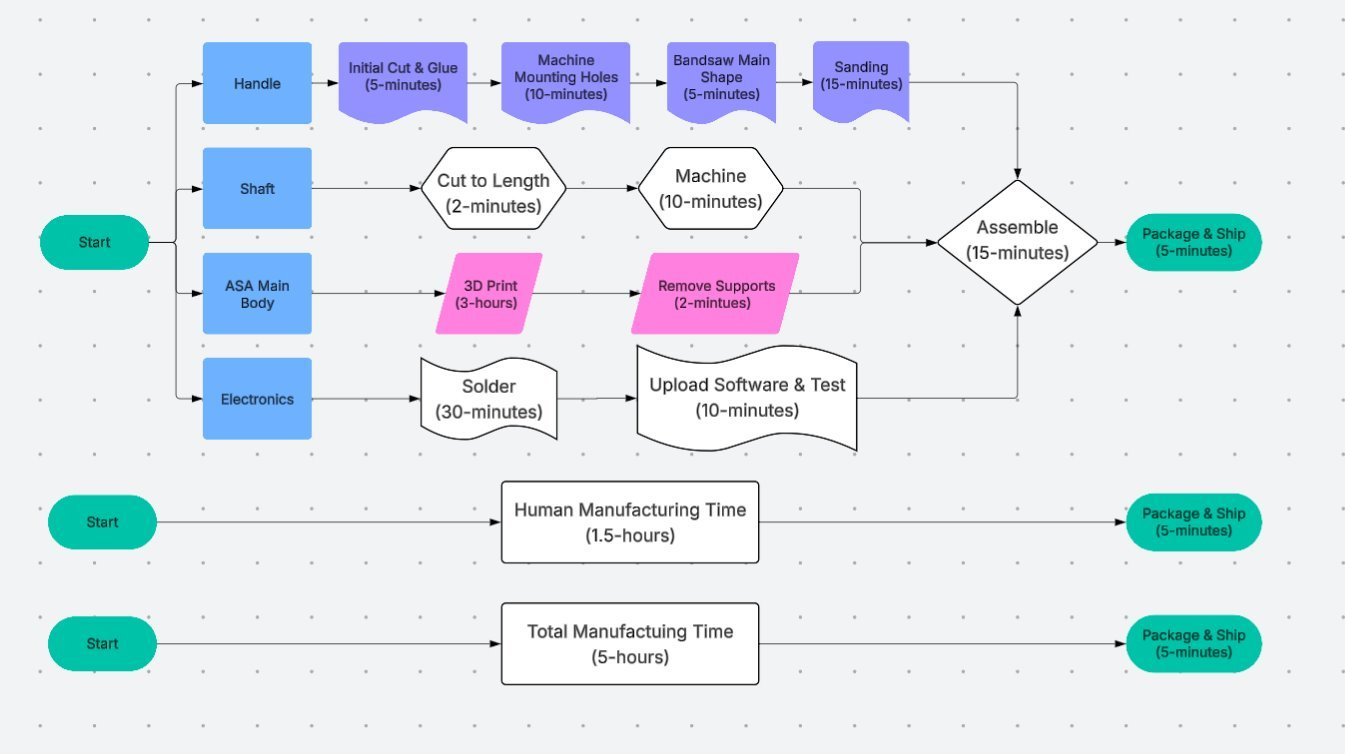
Machine the shaft, shape the handle, print the housing, solder, assemble. About 1.5 hours of hands on labor and 5 hours total per unit, with every material chosen for repeatability at scale.